By: Zachary Getchell
A rambling and sagging structure perched on a hill, a mesmerizing sequence of vacant hallways set in snaking blue carpets, a mansion distorted by oppressive angles, such are the makings of the horror stories that simultaneously captivate and ensnare the beholder. These uncanny structures conjure a certain feeling of anticipation that draws upon the mind’s ability to produce terrors from the very shadows of a place. A properly utilized atmosphere allows a viewer to experience the same feelings of isolation, terror, and vulnerability of the story’s ensemble. Instead of relying on typical cheap jumpscares, many horror stories opt for a much slower route which can terrify even in those interludes between events.
Atmosphere in horror functions by transforming ordinary elements into something threatening. Silence, darkness, isolation; words as short, and as claustrophobic as their meaning, and in practice can become great sources of fear. A well-crafted setting makes the audience feel as if they too were trapped in the confines of the story. An example of which would be the cabin in the woods trope used in movies such as Sam Raimi’s “Evil Dead”. In this instance, the isolation presented by the cabin as well as the treacherous surrounding environment contribute to the setting as well as the atmosphere. This consistent, oppressive discomfort often proves more effective than a traditional instance of shock, because it stays with the viewer for the remainder of the story.
While monstrosities and harrowing violence may define many horror stories, it is through
atmosphere and setting that makes them truly memorable.
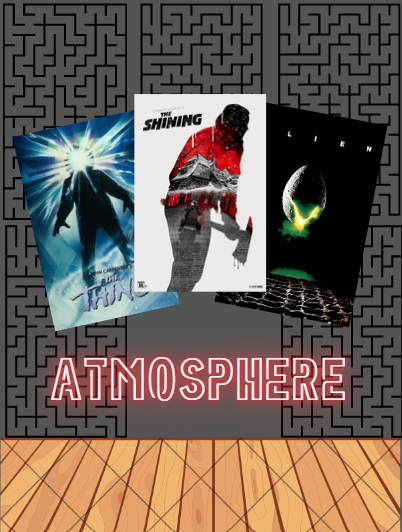
A particularly strong example of properly used horror is seen in John Carpenter’s “The Thing”. Set in a remote Antarctic outpost, the film uses isolation to create tension. Cut off from the world and becoming increasingly trapped by the relentless snowstorms, the idea that there is truly nowhere to run becomes cemented. Similarly, Stephen King’s “The Shining” uses the deserted Overlook Hotel to create a prevailing sense of unease. The vast, quiet, and seemingly impossible hallways completely devoid of people make the setting feel unnatural and even unsettling at times. Atmospheric movies pride themselves on being able to terrify even in the interludes before events as opposed to movies such as “Friday the 13th”, “Halloween” or “A Nightmare on Elm Street” which opt for sudden violence, and direct confrontation. Unlike the typically gorier medium, the environment itself becomes the source of fear, not just the events that take place within it.
“The oldest and strongest emotion of mankind is fear, and the oldest and strongest kind of fear is fear of the unknown,” wrote H.P. Lovecraft in his famous essay, Supernatural Horror in Literature, and such is especially applicable to the psychological workings of atmosphere in horror. People being naturally afraid of the unknown may be easily led on by intentional story gaps or by precariously built tension, and this allows the viewer’s mind to wander and consider the horrors that lie unseen. An example of such is demonstrated in the film “Skinamarink”, which follows two children trapped in a nightmarish distortion of their house. “Skinamarink” is delivered in extended shots of deeply unsettling and largely shadowy rooms forcing viewers to consider what lies just beyond sight. When a setting feels utterly inescapable, and the conflict comes from the mind’s surrender to fear, both the audience and main cast are forced to confront the situation without respite nor release of their lingering terror.
While monstrosities and harrowing violence may define many horror stories, it is through atmosphere and setting that makes them truly memorable. By imbuing in the audience a sense of isolation, dread, and inescapability, horror can leave a lasting impact that extends far beyond a single scare. Atmosphere may prove the vessel of fear, a proverbial ark of terror ever encroaching. In the end, although movie monsters may lurk in the closets of one’s mind, it is the atmosphere that makes that closet truly unnerving.
Graphic by Zachary Getchell