By: Lucia Gabriel
Many high school students no longer go to the mall for shopping, but instead browse through their phones to find products, clothes, and accessories. As online shopping has become more convenient, the internet has had a greater impact on what students buy, their purchasing decisions, and whether they need the items they want to buy.
For high schoolers, convenience is a major reason to shop online. A junior at Ponte Vedra High School (PVHS), Hannah Hosseini, explained that she shops online because it saves her time. She said, “I shop online all the time, at least once a week. I don’t have that much free time to go shop for hours, and also some stores I really like aren’t nearby, so having them online makes it easier for me.” Maddy Barry, a senior at PVHS, likes how shopping online requires minimal effort, and explained that she purchases products online multiple times a week. She said, “When I shop in person, it’s always really busy, and there is more of a selection online, so I like the convenience of it.”
Hosseini pointed out that social media has introduced her to new websites and stores, but this exposure has led her to make unnecessary purchases. Claire Peak, a senior at PVHS, agrees with this, saying, “The internet has changed my shopping habits because products are put in front of our faces so much that we start to think we need them.”
Social media platforms, such as Instagram and TikTok, allow students to discover products through advertisements, influencers, and trends. They introduce students to stores and items they would likely not find otherwise. Abby Shin, a senior at PVHS, said, “Social media influences me because I sometimes buy clothes just because they went viral, or I buy random things that I don’t really need.” She explained that she notices in others that the internet heavily shapes their style for certain clothing types.
“I shop more in person because I can try on the clothes and see the product’s quality in real life rather than just relying on a picture.”
Catherine Stoltz (12)
Online reviews can also shape students’ purchasing decisions because before buying a product, they may turn to feedback that other customers wrote to determine whether it is worth buying. Shin explained that she looks at online reviews to help her find the correct size for her and learn about the quality of the item. After reading reviews on an item from SHEIN, a fast-fashion online website that sells low-cost clothing, she decided not to buy it because the reviews pointed out that the clothes were poor quality. Barry explained that when she buys skincare, if there are reviews saying that it has side effects on the skin, then she does not buy it. Catie Hoag, a senior at PVHS, had a similar experience while shopping on SHEIN. She explained that she did not purchase a pair of shorts after reading a customer review saying they ran too small. Some students use reviews to help them decide what size or color to get, rather than for the quality of the product. Ali Colteryahn, a senior at PVHS, said, “I usually don’t look at reviews unless I’m looking at sizing recommendations. Reviews have the biggest impact on the size I order, but I have never decided to buy something only based on a review.”
Online shopping also gives teenagers a wider range of products than they would find in store. Shin said, “Usually online shops have more options than physical stores do, such as size and colors.” Even though online shopping makes buying items more efficient, some students still appreciate the ability to look at products in person. Peak said, “I usually don’t do much online shopping because I like the experience of going shopping with my friends in person. I also like that I can try on clothes to see the quality of them and if they fit right on me.” Catherine Stoltz, a senior at PVHS, explained, “I shop more in person because I can try on the clothes and see the product’s quality in real life rather than just relying on a picture.”
The amount of time it takes to ship products can make online shopping challenging, especially when students need clothes for a specific event. Hoag explained that she orders dresses online for homecoming and prom because it makes finding outfits easier, but delivery timing can be an issue if she orders the items last minute.
Some teens still go to brick-and-mortar stores because they can see the items in real life and decide if they should purchase them. Stoltz explained that goes to stores when she wants to buy from brands that she hasn’t previously bought from, and she likes going to physical stores to try on the clothes. Harper Eddings, a senior at PVHS, said that she likes going to stores when she wants to buy jeans. She said, “Most of the time jeans are expensive and they all fit differently. I also buy shoes in physical stores to make sure they fit right.” Shin also explained that she does not buy jeans online, saying, “Jean sizing is different for every brand, and I feel like no jeans fit the same.” Another item she doesn’t buy online is dresses, and she said, “I never know how long dresses are until I try them on, so I just buy them in person.”
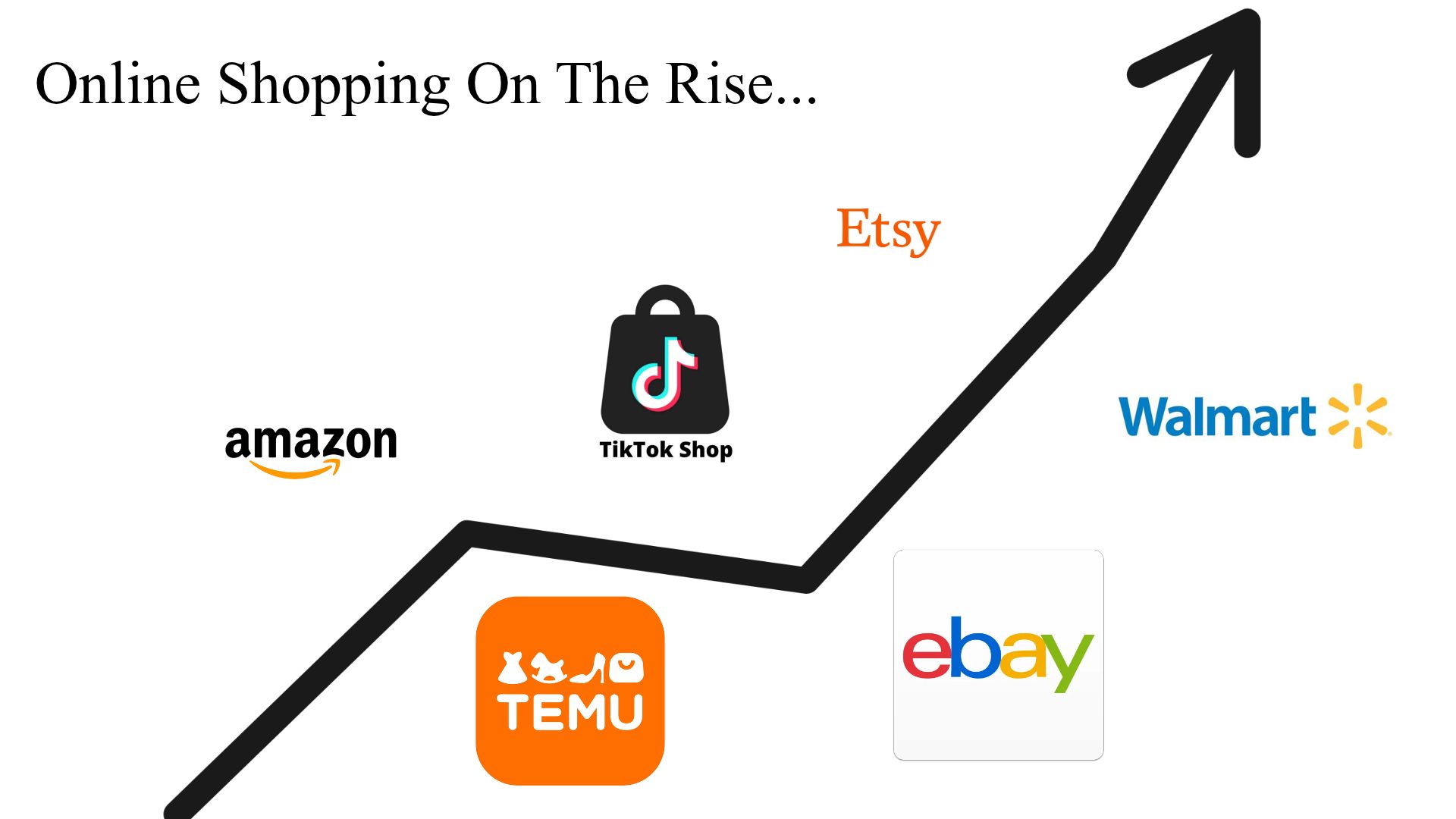
Online shopping has increased over the past few years. According to usafacts.org, “In 2024, Americans spent $1.2 trillion on online retail, or a record of 16.1% of the $7.4 trillion spent on retail overall. This is nearly two percentage-points higher than 2022, when 14.4% of retail sales happened online.” Online retail has steadily increased, and the retail industry has employed more people. This growth shows how online shopping continues to become more common, which allows customers to purchase items without going to physical stores.
According lexingtonlaw.com, “There are around 27.7 million teenagers living in the United States who spend an estimated $63 billion annually.” With social media platforms constantly showing students new products, online shopping can influence where they choose to spend their money. According to medium.com, “Amazon remains the undefeated champion of teen spending.” Teenagers also spent almost $1 million in 2024 on Ticketmaster.
The internet has changed how students find and purchase products. Instead of relying on going on trips to the mall, students can shop from the convenience of their home. They can use online reviews to make decisions about what to buy, but being constantly exposed to trends and advertisements can encourage impulsive purchases. The rise of online shopping has changed how students spend their money and discover new items they want.
Graphic by Aden Seelbinder