By: Madyson Jackson
There is something interesting about how quickly people can form an opinion about an entire genre of music without ever really listening to it. Emo, in particular, has developed an identity that people often associate with a certain appearance, attitude, or kind of person. But music is rarely that simple, and neither are the people who listen to it.
The emotional vulnerability and expressive songwriting commonly associated with emo music are not exclusive to the genre. Confessional lyrics, introspective themes, and music that gives language to otherwise difficult emotions can be found throughout mainstream pop and rock. Elements of what listeners recognize as emo may be more familiar than they realize, even if they wouldn’t necessarily associate those sounds with the genre.
“People focus too much on genre that they don’t listen enough.”
Selene Miller (12)
For some, the connection goes beyond listening. Selene Miller, a Ponte Vedra High School senior who participates in the alternative music scene and enjoys playing music, views songwriting as an extension of personal expression. She compares writing lyrics to keeping a diary, describing how melodies and harmonies can communicate thoughts that ordinary words sometimes cannot.
Miller also believes that preconceived ideas about musical genres can prevent people from discovering music they might otherwise connect with.
“People focus too much on genre that they don’t listen enough,” Miller said. “Some associate music genres with groups of people they don’t particularly like and therefore don’t give so many songs a chance.”
Beyond the music itself, Miller describes the alternative scene as a welcoming community where people encourage one another and share an appreciation for creativity. The assumptions that often surround genres such as emo and hardcore, she says, don’t necessarily reflect the experiences of those involved in them.
Enjoying the genre, however, doesn’t require identifying with its associated culture or aesthetic. Taylor Bestic, a Ponte Vedra High School senior who listens to emo and pop-punk music, doesn’t necessarily fit the image commonly associated with those genres.
“I dress very basic but my music is on the emo side/heavier side,” Bestic said.
Bestic’s experience illustrates how musical taste doesn’t necessarily correspond with personal appearance or identity. She also distinguishes between appreciating a song and identifying with its underlying message. Although some emo and pop-punk music explores political criticism and challenges social norms, listeners don’t necessarily have to share every sentiment expressed in a song to appreciate its sound or the way it makes them feel.
Ultimately, music is not limited by the expectations people attach to it. Genres can influence one another, listeners can find meaning in unexpected places, and creativity can take forms that don’t always fit conventional expectations. Sometimes, the only thing standing between someone and music they might enjoy is an assumption they haven’t thought to question.
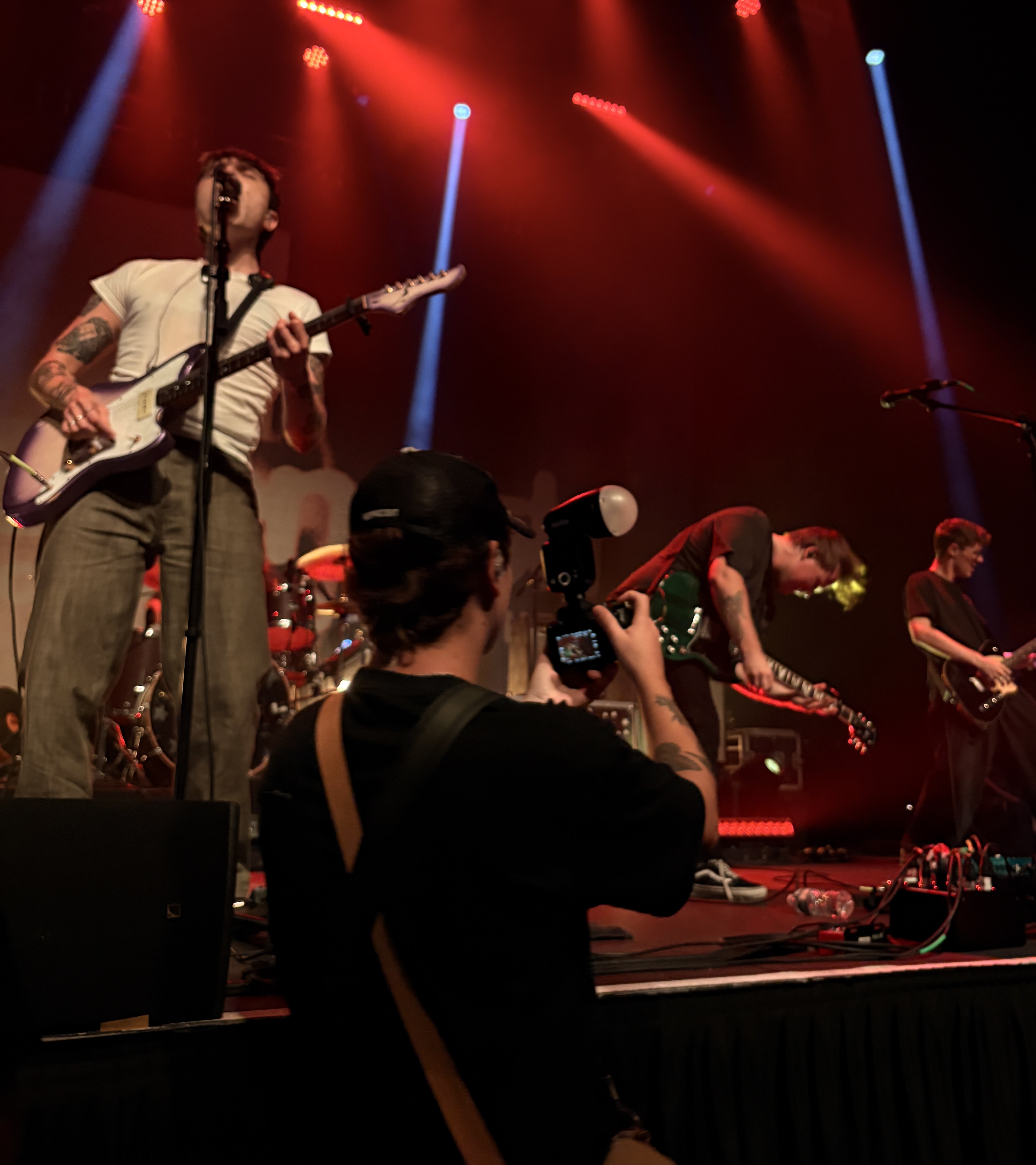
Pictured: Arm’s Length concert