By: Herman Syse Ulfsnes
The American, Norwegian, and English school systems share the same goal of educating children but differ in structure, curriculum design, assessment methods, governance, and school culture. These differences shape how students experience school, how and when they specialize, and how they move into higher education and careers. In the United States, typical progression is elementary school grades one through five, middle school or junior high grades six to eight, and high school, grades nine through twelve. In Norway, the typical progression is primary school from first to seventh grade, lower secondary school from eighth to tenth grade, and upper secondary school from grade 11 to 13. In England, children begin primary school at age five and continue until age 11, then move into secondary school from age eleven to 16. After completing compulsory education, most students continue into “sixth form” or college until the age of eighteen. In all three countries, students generally finish school between the ages of 17 and 19.
Assessment in the U.S. includes a mix of teacher evaluations, state tests, and national standardized exams like the SAT or ACT, with graduation based on credit accumulation and local requirements rather than a single national exam. In Norway, students take national exams in both lower and upper secondary school, which influence university admissions and career options. In England, students face high stakes of national exams at age 16 (GCSEs) and again at 18 (A-levels or vocational equivalents), which strongly determine access to higher education and career pathways.
While American students typically remain generalists through high school and specialize later in college, Norwegian students make more definitive educational and career choices at 16, shaping their academic and vocational paths earlier. English students also begin specializing at 16, but their choices are subject-specific rather than track-based, creating a system that emphasizes exam performance and early narrowing of academic focus.
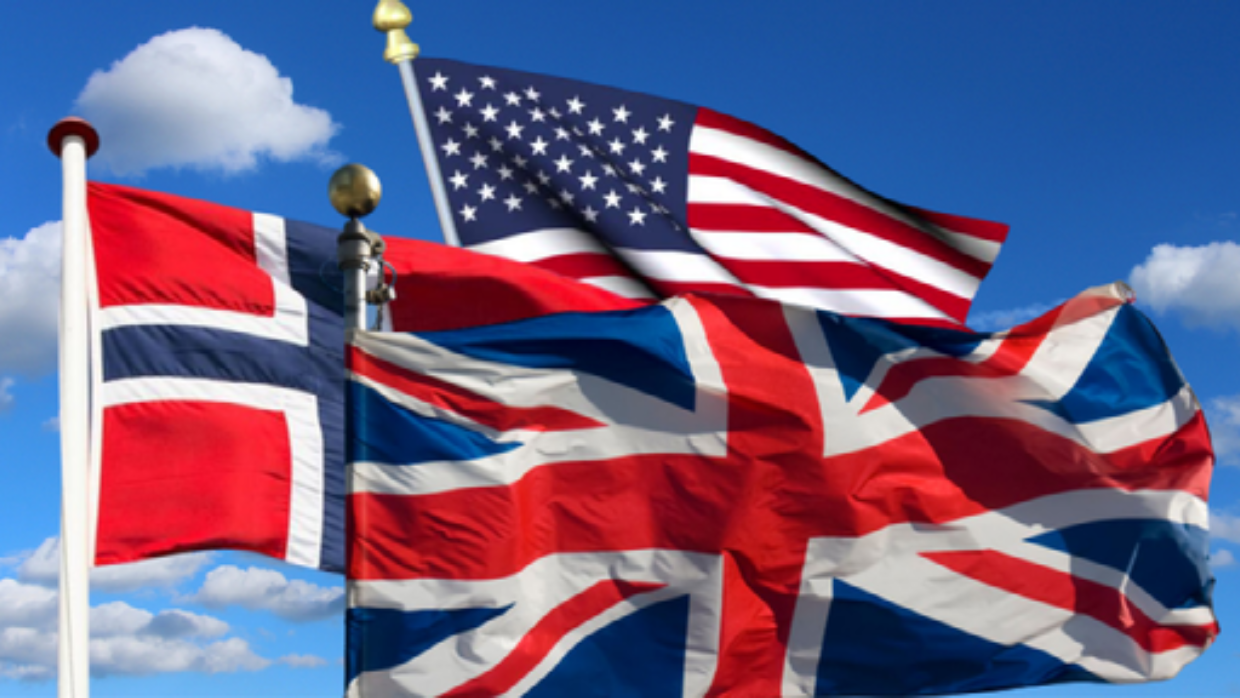
Pictured: The three countries flags: Norway, England, and United States.