By: Katie Hernandez
In a country defined by polarization, loneliness, and digital distraction, a quieter crisis is unfolding beneath the surface: Americans are reading less than ever before. At the same time, psychologists and educators warn of a troubling decline in empathy, our ability to understand and share the feelings of others. While many forces shape empathy, a growing body of evidence suggests that the erosion of reading habits may be playing a significant role.
The connection is not merely poetic. Reading, especially narrative fiction, has long been recognized as one of the most effective tools for building empathy. Yet federal data shows that reading for pleasure is in steep decline across the United States, particularly among young people. As the nation reads less, it may also be losing one of its most accessible pathways to emotional understanding.
Federal and academic data paint a stark picture of America’s reading habits. According to the National Endowment for the Arts, multiple federal surveys show a “gradual and worrisome trend of fewer Americans reading for pleasure,” with participation rates falling across age groups and demographics. The decline is especially consistent among the youth. University of Miami researchers note that reading for pleasure is “plummeting in the U.S.,” particularly among middle and high school students. The steepest declines in reading are occurring in communities already facing educational and economic challenges. Dr. Itle-Clark states that she believes this phenomenon is happening because “public libraries are not always accessible to every person” and that “many people have limited time to read for leisure, as they may be working more than one job.” Reduced reading may widen empathy gaps across socioeconomic and racial lines, deepening existing divides.
Consequently, literacy outcomes are worsening. The Nation’s Report Card shows that reading scores for U.S. students have continued to fall, with 2024 scores declining by two points for both 4th and 8th graders compared to 2022—deepening a downward trend that began before the pandemic. High school seniors are faring no better. Their average reading scores have dropped to the lowest level since 1992, according to Harvard’s analysis of the latest national assessment. Young people are reading less for pleasure than any earlier generation. With reading scores at historic lows, they may enter adulthood with weaker comprehension and perspective taking skills just as online discourse becomes more polarized.
This behavior continues to exist through adulthood. The National Literacy Institute reports that 54% of U.S. adults read below a sixth grade level, and 130 million adults struggle to read basic sentences. Taken together, these numbers reveal a country where reading once a cornerstone of civic and cultural life is rapidly losing ground.
“reading supports a growth in emotional intelligence, meaning that we can better understand the human and non-human animals with whom we share this planet.”
Dr. itle-clark
Now how does this connect to empathy?
Empathy is not an innate trait fixed at birth; it is a skill shaped by experience. Reading, particularly fiction, is one of the most impactful ways to cultivate it. When readers immerse themselves in a character’s inner world, they practice perspective taking the cognitive foundation of empathy. Dr. Itle-Clark state that “reading supports a growth in emotional intelligence, meaning that we can better understand the human and non-human animals with whom we share this planet.” Psychologists describe this as strengthening “theory of mind,” the ability to understand the beliefs, emotions, and motivations of others.
Unlike social media, which often rewards snap judgments and emotional reactivity, reading demands sustained attention, reflection, and imagination. The rise of shortform content encourages speed, not depth. Dr. Itle-Clark goes on to say that “videos are fun and there is a place for online entertainment, but the way it impacts our brain is different than the way words do.” Reading, by contrast, slows the mind and fosters contemplation. As attention spans shrink, the empathy building benefits of deep reading become harder to access. Reading fiction requires readers to inhabit lives unlike their own. As reading rates fall, so do opportunities to engage in this mental and emotional exercise.
Research consistently links reading with higher empathy, better communication, reasoning skills, greater cultural understanding, and improved mental health. These benefits are not trivial. They shape how people navigate workplaces, relationships, and civic life. When reading declines, so does exposure to diverse perspectives and emotional experiences. While empathy is influenced by many factors the decline in reading removes a key mechanism that historically helped Americans understand one another. The stakes are high. In an era marked by division and misunderstanding, empathy is not a luxury; it is a civic necessity. And reading, one of the simplest and most democratic tools for cultivating empathy, is slipping out of reach for millions.
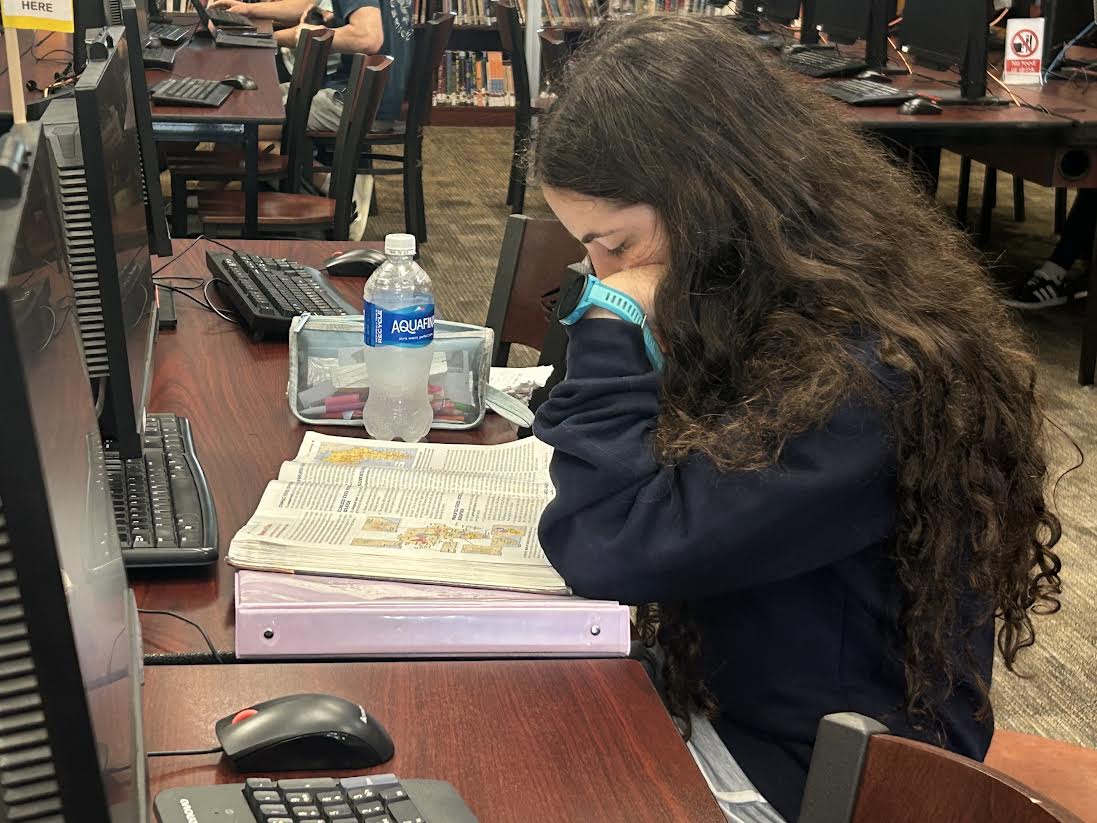
Pictured: A PHVS student reading in our Media Center