By: Jonathon Milicevic
“Philosophy is its time comprehended as thought.” It is said that the purpose of philosophy is to put into words what people already know in their hearts.
Europe lay in ruin; the axis powers were defeated, and for the first time in modern history, one country possessed unprecedented global influence. With the Second World War over, the question became: who writes the rules of the new world? Its answer, the only one capable—the United States.
The western world was a stratified society; the U.S. and everyone else. In this moment of unrivaled leverage, the United States aimed to institutionalize its superiority through globalization.
July 1, 1944, the U.S. hosts the Bretton Woods Conference. Here, the International Monetary Fund and World Bank were founded, with the dollar reigning as their king. This framework expanded with the Marshall Plan in 1947, producing a global regime of open trade, liberalized markets, and free-flowing capital. From this point on, economic growth became increasingly synonymous with integration into the U.S.-led global system.
This formed the rules-based international order. An implicit social contract with the United States: nations that embraced neoliberal ideals were guaranteed market access, security, and growth; those who rejected the bargain, risked economic isolation and political marginalization. By operating under a universal set of rules, global actors came to share similar economic and normative principles. This, in turn, produced the framework for predictable, values-based diplomacy, in which actors operated with a common understanding of obligations, expectations, and mutual interests. Disputes were resolved through institutions, and power was exercised through consensus.
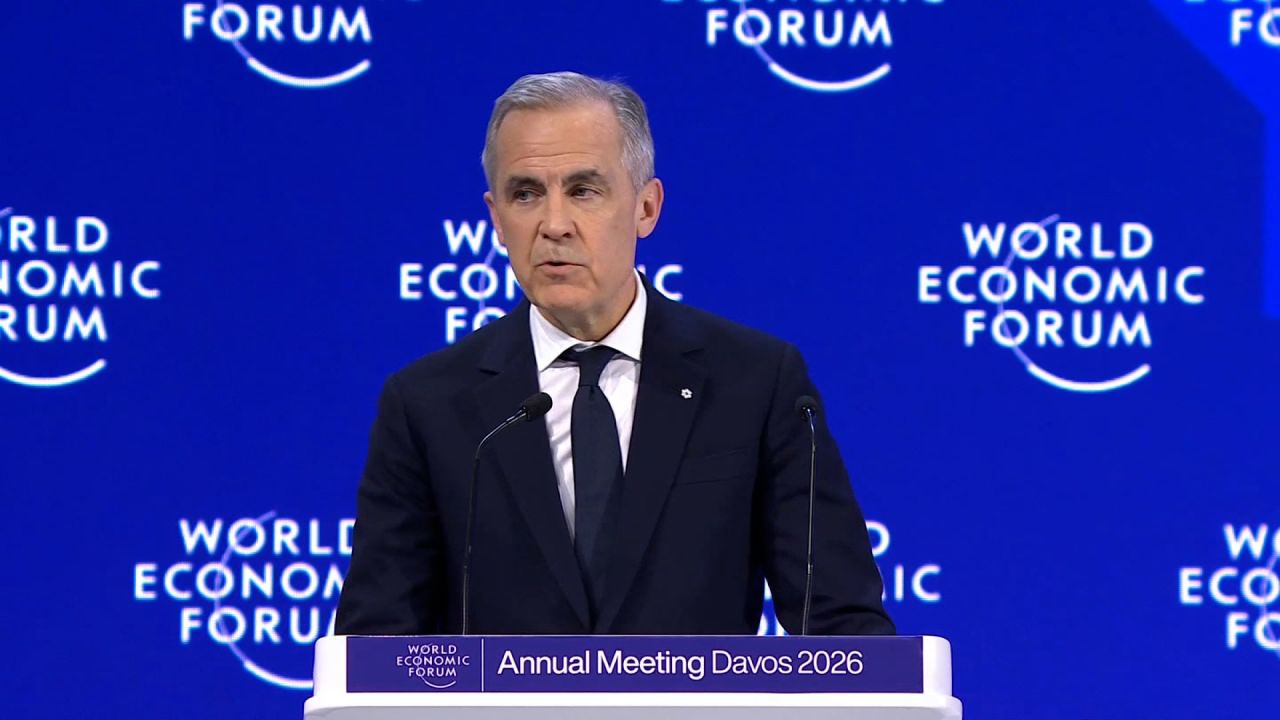
For decades, this bargain had delivered on its promise, producing unprecedented growth, stability, and interdependence. But in January of 2026, at the World Economic Forum in Davos, Canadian Prime Minister Mark Carney put into words what many economists had felt in their hearts: “We are in the midst of a rupture.”
The global community has been “living within a lie.” Carney likened the rules-based order to a Soviet greengrocer. “Every morning, this shopkeeper places a sign in his window, workers of the world unite. He doesn’t believe it. No one does. But he places the sign anyway, to avoid trouble, to signal compliance.” For decades, countries around the world prospered under the predictability of the rules-based order. Nations have placed their signs upon the windowsills knowing that the “Strongest would exempt themselves when convenient.” The global community knew the U.S. didn’t follow its own rules, yet it became pragmatic to pretend as if they did.
The system was only as powerful as the United States’s power to control it. But, now, the U.S. is no longer the world’s sole hegemony. China’s ascent ushers in a new global regime—the era of great power rivalry.
China is not an exogenous threat; after Deng Xiaoping’s 1978 market reforms and World Trade Organization accession in 2001, it became the rules-based order’s most effective exploiter. Open trade advantages large labor pools; thus, China became indispensable: the largest efficient producer in a system that rewards just that. Globalization is structurally paradoxical: a framework designed to universalize prosperity inevitably universalizes power.
Grasping at its waning superiority, the U.S. has moved decisively, executing a bold gambit: the weaponization of the rules-based order. The U.S. now exploits global integration to coerce. Freezing sovereign bond payments, invading Venezuela, tariffs: quoting Thucydides, Carney warns: “The strong can do what they can and the weak must suffer what they must.”
As the U.S. breaches its contract, the lie the global community tells itself is no longer a product of circumstance but a delusion. “The system’s power comes not from its truth, but from everyone’s willingness to perform as if it were true… When even one person stops performing, when the greengrocer removes his sign, the illusion begins to crack.” Carney’s declaration to the world: “Friends, it is time… to take our signs down.”
Carney articulated what may come to define the zeitgeist of the next decade; and this fact is sobering. Encapsulating Carney’s permeation into the mainstream, President of the European Central Bank, Madame Christine Lagarde highlighted in Davos: “I think more ominously and I’ve really got Mark Carney’s speech from yesterday, a really astonishing speech in my mind.” Carney spoke plainly, “Stop invoking rules‑based international order as though it still functions as advertised.” He calls for “living the truth,” and only then can the global community take its next step.
In a world no longer held together by U.S. hegemony, the middle powers—Canada, EU members, Japan, Australia, etc.—must cooperate strategically rather than compete with one another or defer to great powers. The “Middle powers must act together, because if we’re not at the table, we’re on the menu.” Carney warns that reliance on the old-world integration leaves countries exposed to coercion. In response, Carney took a page from the “America First” playbook. The middle powers must decouple by building autonomy in key areas like energy, agricultural commodities, rare earths, finance, and supply chains. “When the rules no longer protect you, you must protect yourself.”
He also called for a fundamental shift in how the global community operates. With the erosion of global institutions, Carney advocates for creating flexible coalitions. He calls this “variable geometry”—alliances formed issue by issue with like‑minded states, rather than overreliance on broad multilateral frameworks.
Just a month later, at the Munich Security Conference, Carney’s warning became fact, and the world stood at a crossroad: militarism or reform. In the shadow of U.S. mobilization near Iran, British Prime Minister Keir Starmer reflected the period of uncertainty, “We must be able to deter aggression, and yes, if necessary, we must be ready to fight.” Alternatively, U.S. Secretary of State Marco Rubio presented his vision, “… we can no longer place the so-called global order above the vital interests of our people… We do not need to abandon the system of international cooperation we authored … But these must be reformed. These must be rebuilt.”
The veil has fallen. The global consensus is clear: the old-world order “is not coming back.” To accept reality is to confront a world no longer anchored by U.S. hegemony. In the era of great power rivalry, speaking at Davos, U.S. Commerce Secretary Howard Lutnick left little doubt: “Globalization has failed the West.”
Pictured: Mark Carney at the World Economic Forum at Davos