By Gabriel Nochera
Every year at Ponte Vedra High School (PVHS), students participate in the annual student elections. Students get a chance to represent their peers in the school’s decision-making process through the student council. Aspiring candidates explain their agenda and how their proposals would help the school and students.
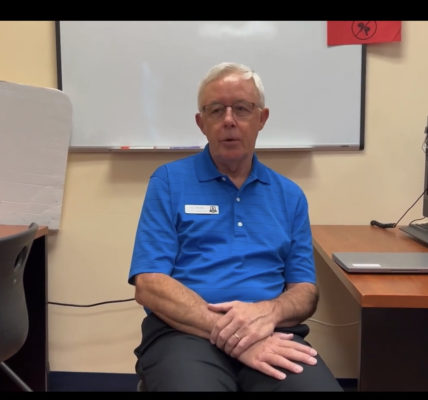
Mr. Weinbrenner, the Student Government Organizer, states, “When you are elected to student government you are elected in what is called an ‘at large’ election, so students will get a list of possible candidates that they can choose who they think from that list should represent their class.” Students select council members by a grade level election, in which the top four most voted candidates become their class representatives. This is done to ensure a variety of ideas and talents are embodied in the Student Government.
This year a variety of students vied for a spot on the student council. Students put forth their agendas and ideas on how they believe the school can improve. David Lawrence is a sophomore at PVHS and has run for student government in the past. David has made it a priority to solve the following problems: “Good homecoming dance, good pep rally…team up with other clubs…[fix] the bathrooms.” Understanding what students want to get fixed plays a part in getting voters on a candidate’s side. Despite not being elected in this year’s schoolwide election, his story of rhetoric exemplifies what all future student body representatives must do in order to get elected. Elections are all about promising students with some benefits over the status quo, and delivering those promises.
“Interactions with people who make decisions and the people who wanted decisions to be made helped me develop my own decision-making skills, and in learning how best to take into consideration the words of my peers in these choices.”
Yo-yo qu (10)
Additionally, campaigning is a crucial step in elections. It holds true today that student elections tend to be a bit of a popularity contest. Presenting positive traits and appealing to the largest possible portion of the student body can be the difference between election or a failed candidacy.
PVHS elections are unique to most high schools, however do draw inspiration from real-world election systems. Ranked voting similarly allows voters to select multiple candidates. Ranked voting is used in states such as Maine and Alaska as a means to determine what the public deems as the best leader. By allowing multiple students to hold the office of class representatives, PVHS’s elections stand in stark difference to other traditional high school election systems. Students elect the top four representatives in their class. Mr. Weinbrenner states, “In the past we used to have…you [candidates] used to run against somebody, and you would have like two really good people that would run against each other and there would only be one winner.” By allowing multiple candidates to be elected, the student government gets a variety of students which helps embody a clearer picture of the student body. By allowing students the freedom to pick multiple candidates for student council, voters may not need to pick between fresh ideas and experience.
Student elections are a time-honored tradition which has resulted in many positive changes that have resulted from the input of students. Mr. Weinbrenner highlights the student government’s responsibility in the betterment of our school, “Our job is to look at problems students have with the school and things that we can sort of make life better for students.” Administrators and teachers can sometimes be unaware of some issues that students face and thus can’t always solve them without student feedback; student government plays a large part in mitigating this issue. Mr. Weinbrenner points out, “One year a student said that the issue that they had was…the locker rooms, I guess the water pressure was really bad in the locker rooms.” Student government is a way for students to air issues they might possess and work towards an actionable solution. Yo-yo Qu, a sophomore at PVHS explains, “Interactions with people who make decisions and the people who wanted decisions to be made helped me develop my own decision-making skills, and in learning how best to take into consideration the words of my peers in these choices.” This allows students to find problems—communicate with others about issues they might possess— and in the process; become a better citizen.
Graphic by Philip Berkwit