By Hailey Flores
What happens when a mentally stimulating pastime, such as reading, becomes “trendy” and “aesthetic”? Colleen Hoover, that’s what happens. Since 2020, YA novels have grown incredibly popular among (mostly) women and girls ranging from early teens to mid-thirties, a trend that becomes even more baffling when one considers that the content included in these books shouldn’t be appealing to anyone regardless of age. From mediocre writing, unrealistic characters, and, excuse the pun, paper-thin stories to genuinely horrible messages and explicit material, it’s shocking that these novels have amassed such large audiences.
YA novels gained popularity in 2020 through “BookTok”, an initially innocent community of readers on the popular social media site, TikTok, which was soon hijacked by consumers of a lower caliber of written media. Typically filled with more spice than story, these books were given an unprecedented amount of attention through social media, thereby creating an entire industry for low-effort, minimal engagement slop that could be annotated to high heaven by so-called readers who are likely only skipping to the parts where they say dirty words.
“YA authors try to address too many issues, which ends up making their books kind of shallow.”
Mr. Richards (Media Specialist)
But what exactly is a YA novel? Or rather, what are they meant to be? While books for older kids and teens have existed since the dawn of written fiction, they weren’t always considered a separate genre. It wasn’t until the 1960s that books like Nancy Drew, originally written and published in 1930 by Carolyn Keene, or Encyclopedia Brown, by Donald J. Sobol, were dubbed as “young adult”. However, it still wasn’t until the late 90s, with books such as Harry Potter by J. K. Rowling, that public interest in the genre began to truly catch on. The release of Harry Potter single-handedly flipped the entire publishing industry upside-down and fundamentally changed the way the public consumed written media. Harry Potter has since raked in over $34.7 billion since 1997 and has become the single most successful book series in the world, to the point where the author herself, J. K. Rowling, became the first ever author to reach billionaire status back in 2004.
Whether her success is deserved is up to personal opinion, but what’s undeniable is that the YA book market now had the potential to be a gold mine and soon, hot new titles began popping up all over Scholastic book fairs from authors such as Suzanne Collins with The Hunger Games and Rick Riordan with Percy Jackson. Admittedly, the early days of YA fiction were harmless. It got younger generations interested in reading and spawned some of the most beloved novels of the modern age.
So, what happened?
These days, YA tends to focus less on the Y and more on the A. In other words, adult themes have been gradually slipping their way into the written media that many young teenagers consume. While there’s nothing inherently wrong with publication houses attempting to reach broader demographics, the issue is that these books are specifically engineered to be mass produced to an impressionable audience and for a genre that has become increasingly problematic in its themes and messaging, it’s obvious how this could be an issue. Many of the most popular books in the genre include borderline abusive love interests, harmful gender stereotypes, unrealistic portrayals of teenage life, and an unnecessary amount of explicit material. Furthermore, buying books and reading them are two completely different hobbies. Yet for many BookTok influencers, there appears to be no difference. Instead of an engrossing and mentally stimulating activity, reading has now turned into a competition. Whether it be to skim through as many books as humanly possible within a single year, or to spend hundreds of dollars on “book hauls”, overconsumption has had a negative impact on both authors and readers alike by creating an endless cycle of taking in and pushing out low-effort content. This affects YA novels especially, as they remain some of the most popular books among social media readers.
Mr. Richards expressed disappointment on behalf of the book club, who have been underwhelmed by past reading lists for “Battle of the Books”. While there have been a few exceptions, such as Neal Shusterman’s Scythe, the general opinion among PVHS readers is that the books are superficial and attempt to address too many issues at once, leading to generic plots with equally generic characters. On another note, Mr. Richards also shared that the classics, such as Jane Eyre by Charlotte Brontë, have gained new popularity among younger readers, showing a gradual shift away from the modern YA genre.
“YA authors try to address too many issues, which ends up making their books kind of shallow.” – Mr. Richards
The clearest solution to the decline in quality books for teens would be to not buy into the consumerist, anti-intellectual propaganda of BookTok influencers and to read for the sake of reading. Contrary to popular belief, reading can be a lot of fun, and it doesn’t have to be expensive either. Aside from the Ponte Vedra High School media center, the St. Johns Public Library system is another great choice, with many locations spanning across the county. A library card is completely free, and with their app, Aspen LiDA, it’s easier than ever to find books to read.
In the end, the media that people consume is up to their own discretion, and there’s absolutely nothing wrong with enjoying a fun and simple “junk food” story. However, as with junk food, moderation is key, and it is equally important to engage with books that challenge and nourish the mind.
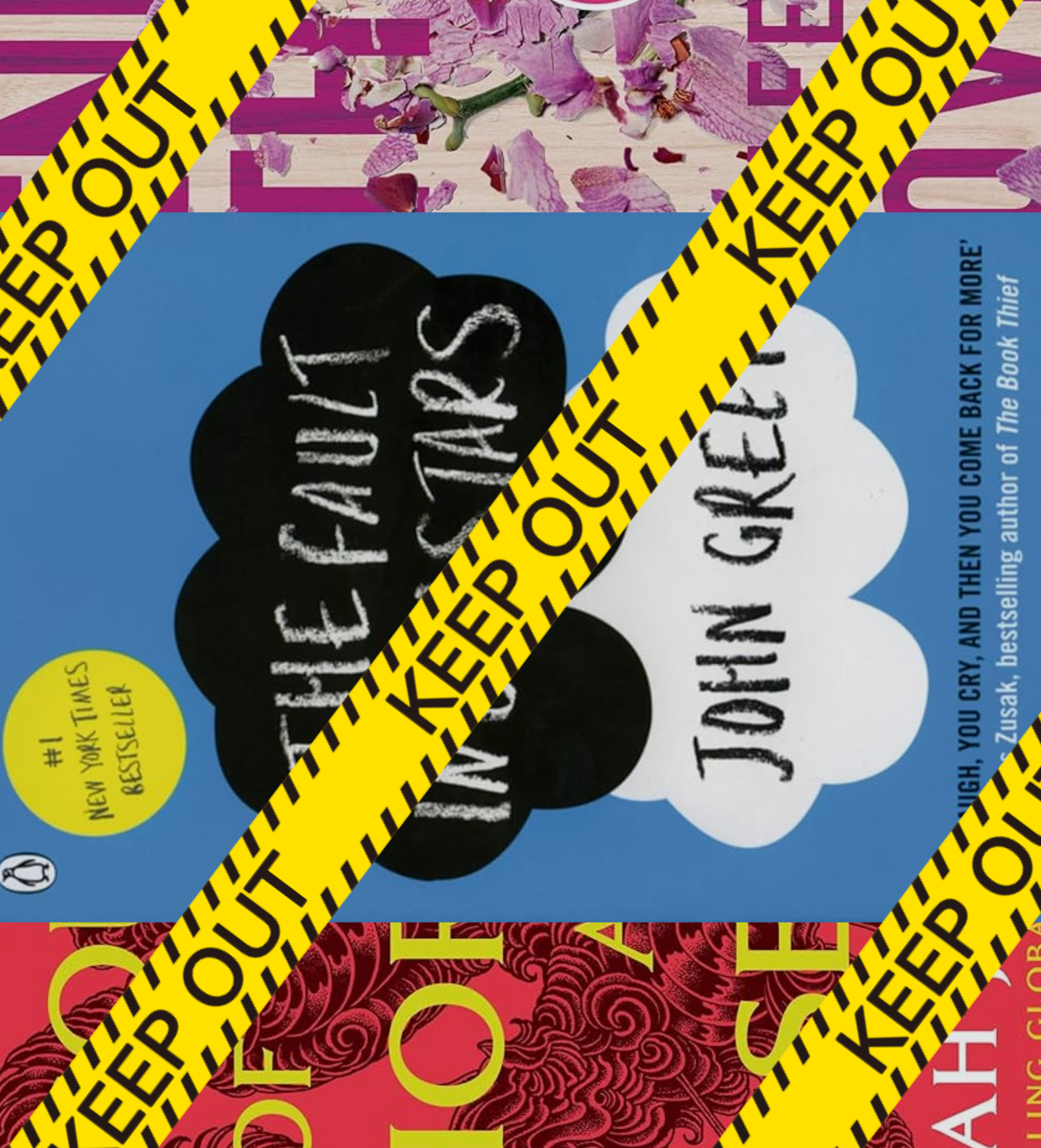
Graphic by Hailey Flores